Euan Uglow: Precision, Patience, and the Quiet Power of Measured Painting
Painter Euan Uglow was known for an unusually precise approach to figurative painting, often using careful measurements and geometric structure to construct his compositions. His slow, analytical process helped shape some of the most thoughtful examples of modern figurative work in contemporary painting.
I first learned about Euan Uglow during a figure painting course at the University of Utah. At the time, I was still forming my understanding of what painting could be—how observation, patience, and structure could shape the final work. When Uglow’s paintings appeared when learning about masters of contemporary art, they immediately stood apart from much of the figurative work I had seen before.
What drew me in first was not the subject matter alone. It was the method behind the paintings—the intense, measured precision of his process.
Euan Uglow - a post-war and contemporary painter - approached painting almost like a mathematician approaches a problem. Every angle, proportion, and spatial relationship was carefully measured and mapped. His paintings often contain small measurement marks along the edges of the canvas, remnants of the careful calculations that guided the composition. Rather than hiding this structure, he allowed traces of it to remain visible, as if acknowledging the quiet architecture beneath the image.
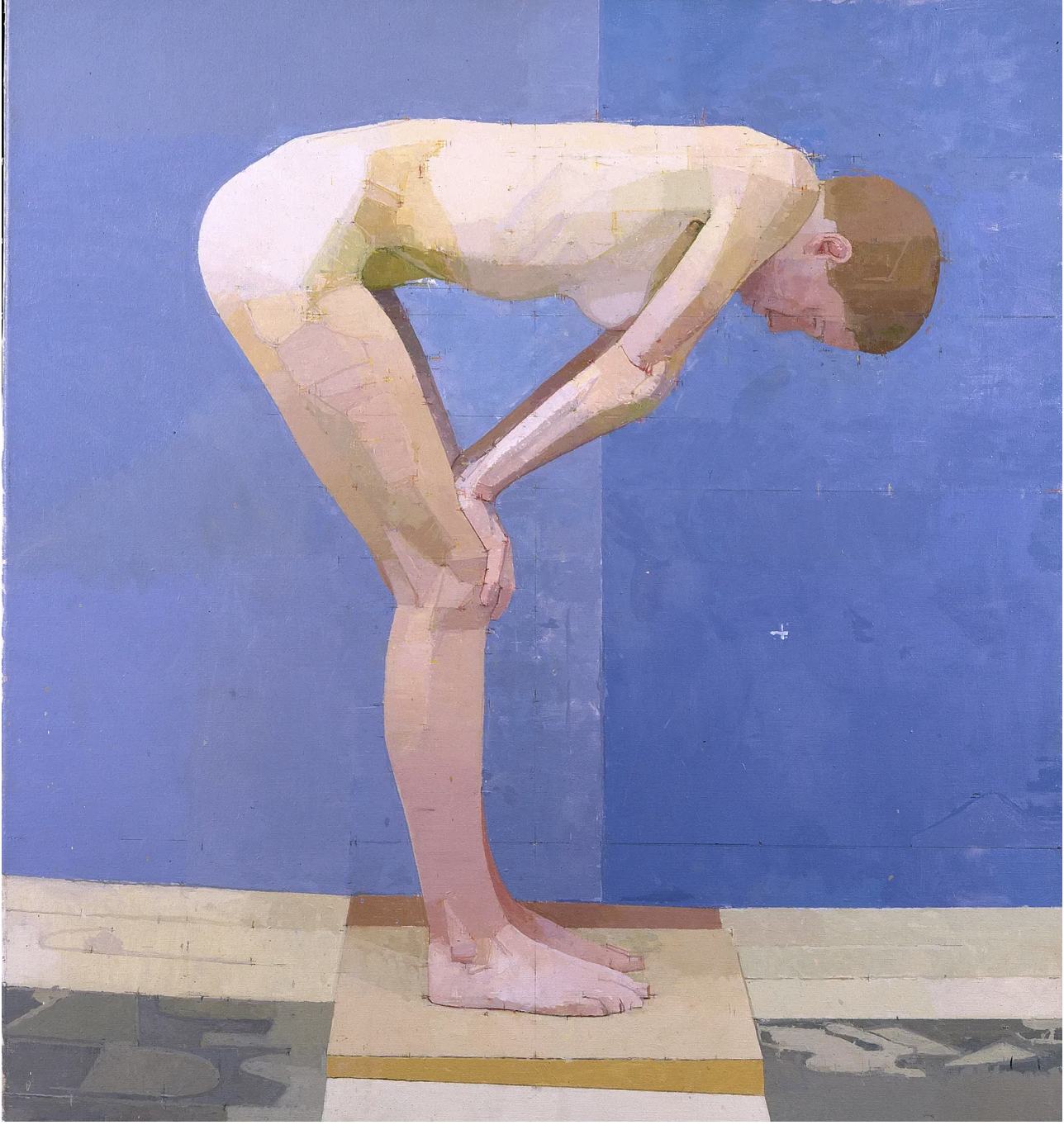
Ali, oil on canvas, 32” x 30,” 1995-1997.
For someone who values process as much as the finished work, this approach resonated with me immediately.
A Methodical Way of Seeing
Uglow is often described as a modern figurative painter (of the post-war and contemporary eras) but that label only tells part of the story. His work exists in an interesting space between representation and structure. While his subjects are typically the human figure or still life, the way he constructs the image leans toward abstraction.
Planes of color are simplified. Shapes are organized with deliberate geometry. The body becomes a set of relationships—angles, curves, and measured distances that fit together like a puzzle.
This balance between observation and structure gives his paintings a unique clarity. They feel grounded and physical, yet also thoughtful and analytical.
For viewers who appreciate contemporary painting, his work offers a compelling example of how tradition and experimentation can coexist. Uglow did not abandon classical observation, but he refined it through a disciplined and highly personal process.
In many ways, his paintings demonstrate how the boundaries between figurative work and modern abstract art are not as rigid as they might seem.
The Discipline of Slow Painting
One of the most fascinating aspects of Uglow’s practice is the amount of time he devoted to each painting.
Some works reportedly took years to complete. His piece “Skull” is testament to that; it looks deceptively simple and straight forward but took him years to complete.
This wasn’t because he lacked direction - quite the opposite. His process required long stretches of observation and adjustment. He would measure the model carefully, mark reference points, construct the underlying geometry, and slowly refine the relationships between forms.
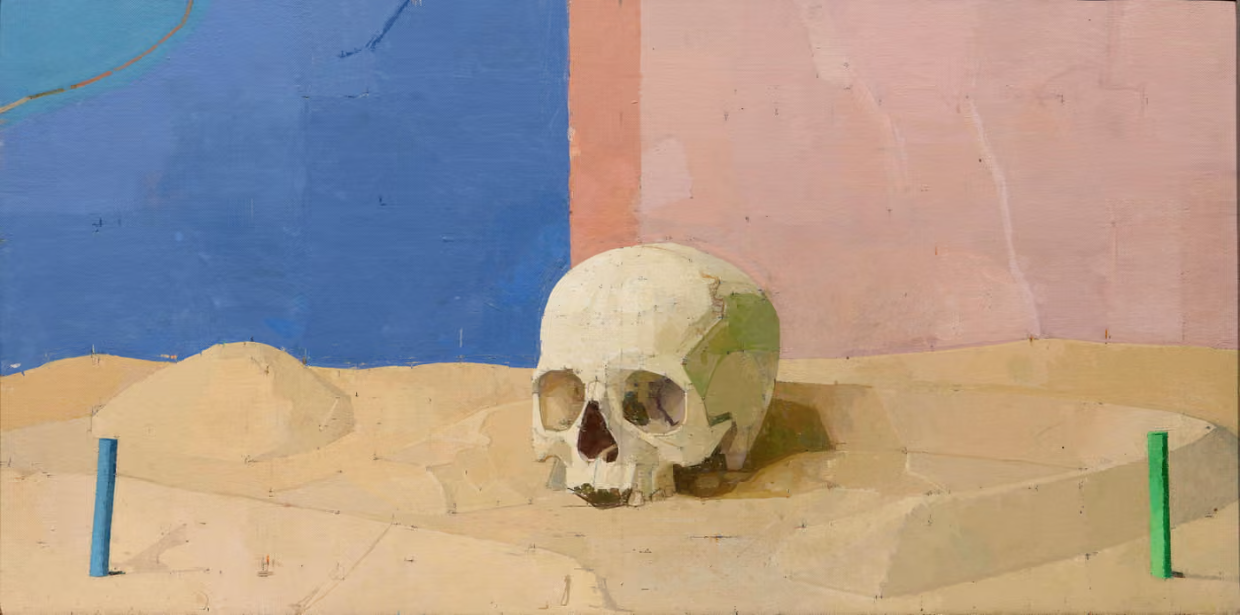
Skull, Euan Uglow, 1994-97.
Painting, for Uglow, was not about capturing a fleeting impression. It was about understanding the structure of what he was seeing.
That patience is something I relate to deeply in my own work.
When I begin a painting, I often know that it may take a month or more to reach a point where the piece feels resolved. Sometimes it takes far longer. There are paintings that sit quietly in the studio for months, even years, before they finally feel complete.
There’s a moment when the painting stops resisting. The composition settles. The colors begin to speak to each other.
Until that moment arrives, the work isn’t finished.
Uglow understood that kind of patience. His paintings carry the calm confidence that comes from allowing a piece to evolve slowly.
Precision as Craft
Another aspect of Uglow’s practice that resonates with me is the emphasis on precision and craft.
In my own studio practice, I spend a great deal of time making handmade acrylic paint. That process requires patience, measurement, and a surprising amount of mathematics. Ratios must be exact. Pigment density matters. Every batch needs to behave consistently once it reaches the surface of the canvas.
It’s a process that rewards careful attention and methodical work.
When I think about Uglow’s measured approach to painting, I see a similar mindset at work. His art was not simply about expression; it was about craft and structure. Each painting was built slowly and deliberately.
The geometry of his compositions reflects that discipline.
Angles align with subtle accuracy. Forms sit within carefully measured boundaries. Even the negative space surrounding a figure feels intentional.
The result is a painting that appears calm, balanced, and quietly powerful.
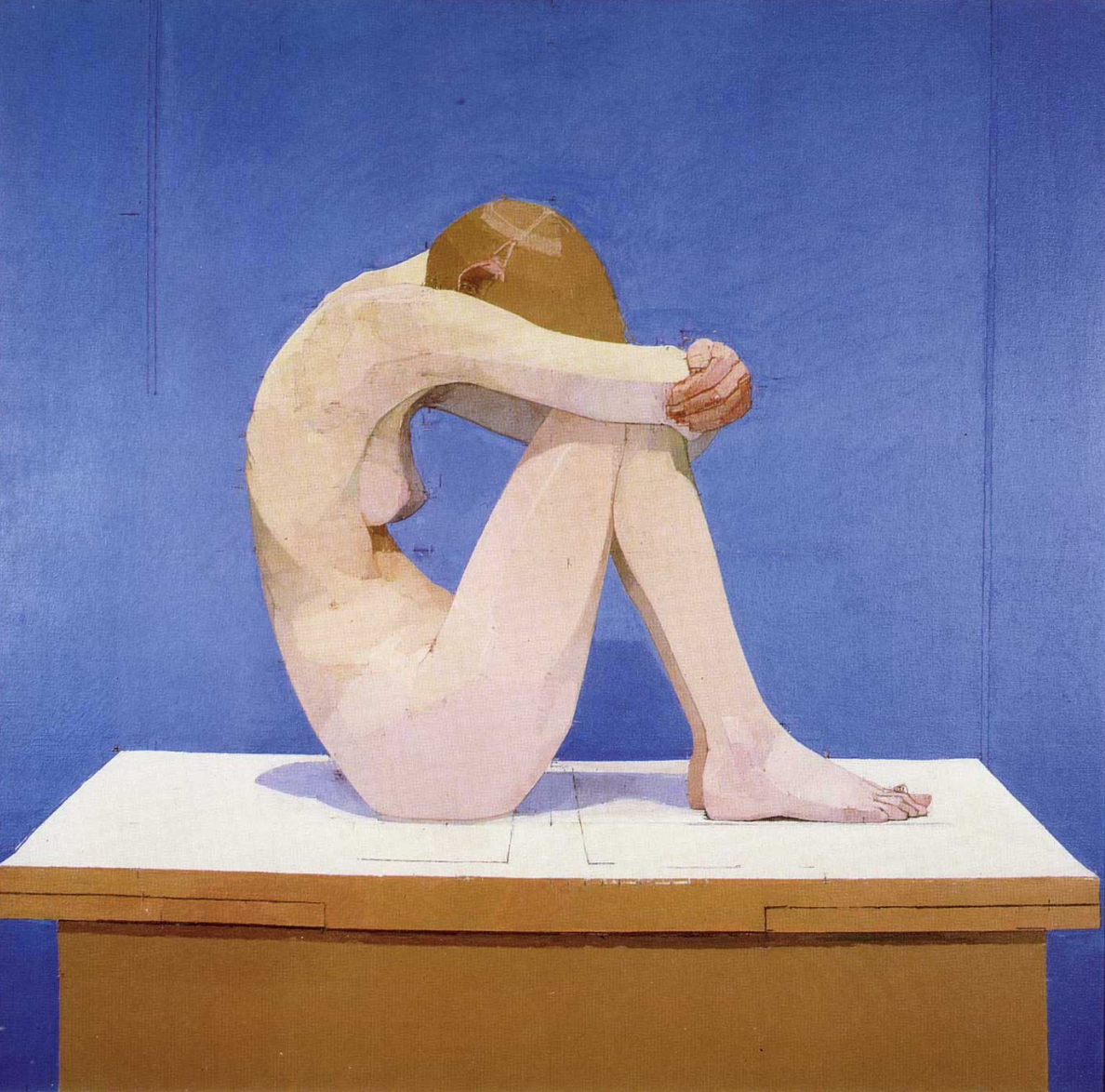
Summer Picture, Euan Uglow, 1971-72.
Geometry and Warmth
One of the most intriguing aspects of Uglow’s paintings is the way they combine analytical structure with subtle warmth.
At first glance, his compositions can appear almost architectural - the shapes are clearly defined with precise strokes. Planes of color interact with a kind of quiet logic.
But within that structure, there is softness.
Skin tones shift gently between warm and cool hues. Color transitions are understated but deeply considered. The geometry never overwhelms the humanity of the subject. They feel both intellectual and emotional at the same time.
This balance is what makes his paintings so compelling.
The viewer senses the careful thought behind the work, yet the painting never becomes sterile. Instead, it holds a quiet intimacy and rigor of discipline.
That balance—between structure and feeling—is something many painters strive for throughout their careers.
Lessons for Contemporary Painters
For artists working today, Uglow’s work offers several valuable lessons.
First, it reminds us that time can be an essential part of the creative process. In an era that often celebrates speed and constant production, his practice stands as a reminder that depth often emerges slowly.
Second, his work shows how careful observation can coexist with abstraction. The measured geometry of his compositions demonstrates that figurative painting does not need to abandon structure or experimentation. In fact, those elements can strengthen one another.
Finally, Uglow’s paintings emphasize the importance of process. The marks, measurements, and adjustments that shaped his work are not hidden away; they are part of the painting’s story.
For collectors and artists alike, that visible process can make a work feel more alive. You can sense the time, patience, and thought that went into its creation.
Why Artists Like Uglow Matter
When we study artists like Euan Uglow, we are not simply looking at historical examples of figurative painting. We are studying ways of thinking. We are watching artists pushing the envelope as what is expected or de rigueur in the art world.
His work reminds us that painting can be both analytical and intuitive. It can involve measurement, calculation, and geometry while still retaining creativity, warmth, and humanity. And Uglow’s methods can translate to any genre.
For artists working across many styles—from figurative work to modern abstract art and contemporary painting—that mindset can be deeply valuable.
It encourages us to slow down, look more carefully, and trust the gradual evolution of a painting.
In my own studio practice, that lesson continues to resonate.Some paintings reveal themselves quickly. Others take time. A few demand patience that stretches into years and I revisit after some length of time.
But when the relationships finally settle into place—when color, shape, and structure begin to feel inevitable—the result carries a kind of quiet certainty where silence finally reigns.
That sense of resolution is something Uglow understood deeply.
And it’s one of the many reasons his work continues to inspire painters today…including me.
The careful structure and patience I admire in Uglow’s work continues to influence my own studio practice. If you're curious how these ideas appear in my paintings and drawings or more thoughts from my studio, please follow The Current.