Line Drawings: A Different Kind of Modern Abstract Art for Collectors
Modern abstract art offers collectors something increasingly rare: a lasting relationship rather than a fixed image. Unlike representational work, which often reveals itself quickly, abstraction continues to unfold over time. Its meaning is not delivered all at once. It develops gradually, through repeated viewing and sustained attention.
For collectors drawn to nature art and ocean paintings, this relationship becomes especially meaningful. The ocean itself is never static. Its rhythms shift constantly through weather, light, and season. Contemporary painting rooted in abstraction reflects this same quiet variability. It allows the collector’s own perception and memory to become part of the work.
At the foundation of this process is line.
Line is the first translation of observation into form. It is where thought becomes physical. It establishes structure, movement, and visual rhythm. As a medium, line drawing offers collectors a direct encounter with artistic perception in its clearest state.
Line Drawings Hold Unique Meaning for Collectors
Observation. Discipline. Repetition. These form the core of line drawings.
Line drawings are the culmination of preliminary sketches that establish muscle memory, allowing ink to move uninterrupted across the surface. Over time, repetition teaches the hand to move with clarity and confidence. Hesitation fades. The marks become more direct.
This process shares similarities with blind contour drawing—a figure drawing method in which the artist draws from life while looking only at the subject, not at the hand. Perception guides movement continuously, without interruption or correction.
I find blind contour drawing creatively freeing. It provides release from planning and allows a more immediate connection between concept and execution.
For collectors, this immediacy is essential. Line drawings reveal visual language in its most distilled form. They show decisions without disguise. Correction is possible, but far more visible than in layered paintings. Each mark reflects trust in the process.
Line drawings also offer something experiential. They unburden the mind. Their clarity provides a visual pause, allowing space for reflection. Over time, collectors may notice that what first appears simple becomes increasingly nuanced. Attention deepens. Subtle relationships emerge.
This gradual unfolding creates lasting engagement between artwork and collectors.
Collecting Modern Abstract Art as an Ongoing Experience
Modern abstract art does not impose a fixed narrative. Instead, it creates space for interpretation. This openness allows collectors to form personal relationships with the work.
Nature art in abstract form invites sensing rather than identification. Ocean paintings, in particular, reflect universal experiences—horizon, distance, movement—without defining them literally. Each collector brings their own memory to the work. Over time, the artwork becomes intertwined with those memories.
The experience evolves naturally without becoming predictable; it continues to offer something new. Indeed, this openness is one of the defining strengths of contemporary painting.
Different Languages: Line Drawings vs. Paintings
While both drawing and painting belong to modern abstract art, they operate through different physical and visual languages.
Line drawing requires precision and restraint. The materials are direct and unyielding. Ink does not allow the same revision as paint. Creating a body of line drawings involves retraining the hand and eye—adjusting pressure, movement, and rhythm until clarity emerges.
Painting, by contrast, allows layering. Paint can be built up, removed, and reworked. Surface texture, depth, and viscosity introduce additional visual complexity.
In my own contemporary painting practice, ocean paintings such as Of Ocean and Sky No. 13 convey motion through layered paint, texture, and material interaction. The surface reflects depth and physical accumulation.
In contrast, line drawings such as Centrifugal, from my “Ink on Paper” series, rely entirely on gesture. Motion is conveyed through mark-making alone. The waves are expressed through direct, uninterrupted ink lines.
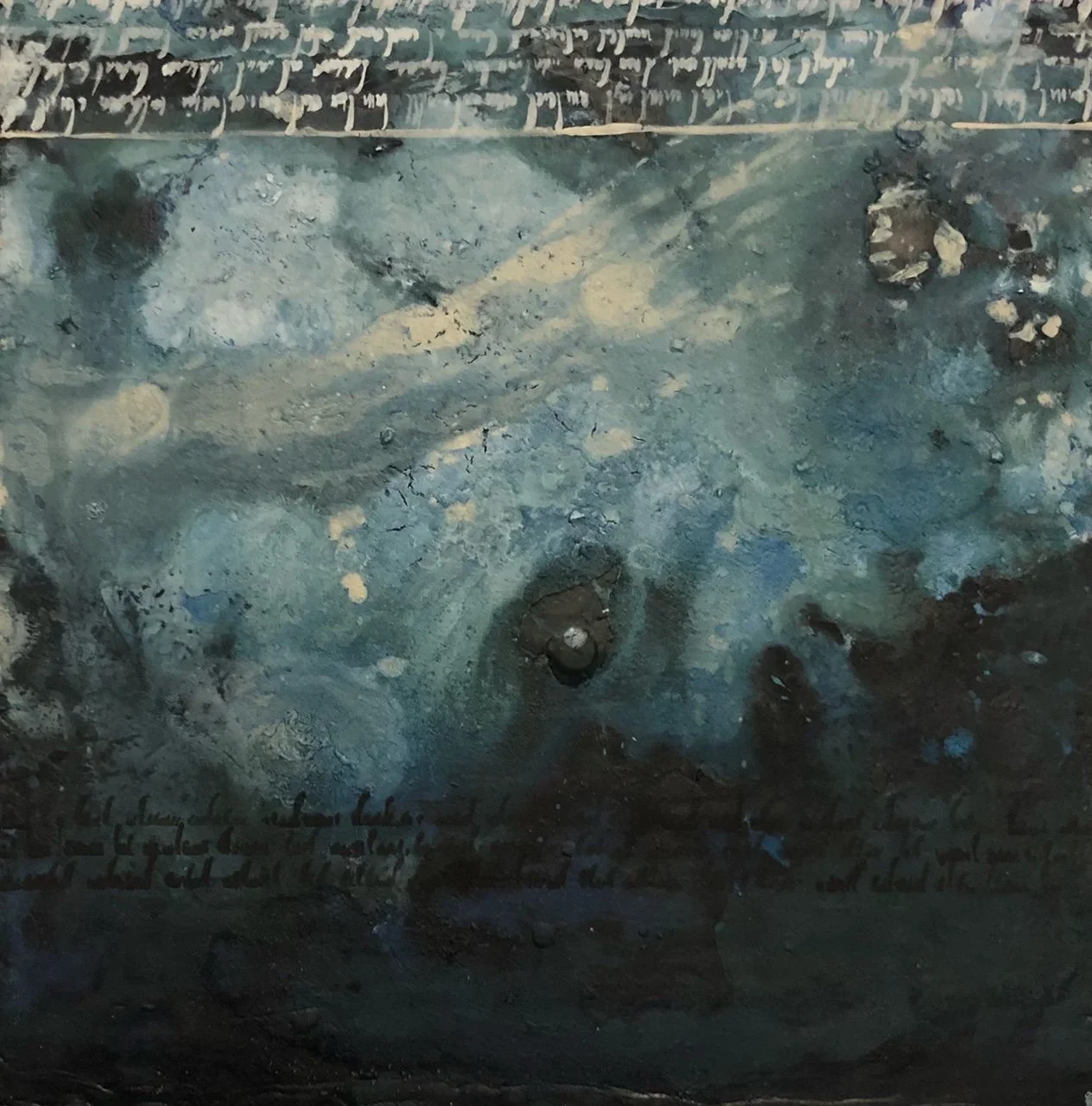
Of Ocean and Sky No. 13, 6×6 inches, acrylic on panel
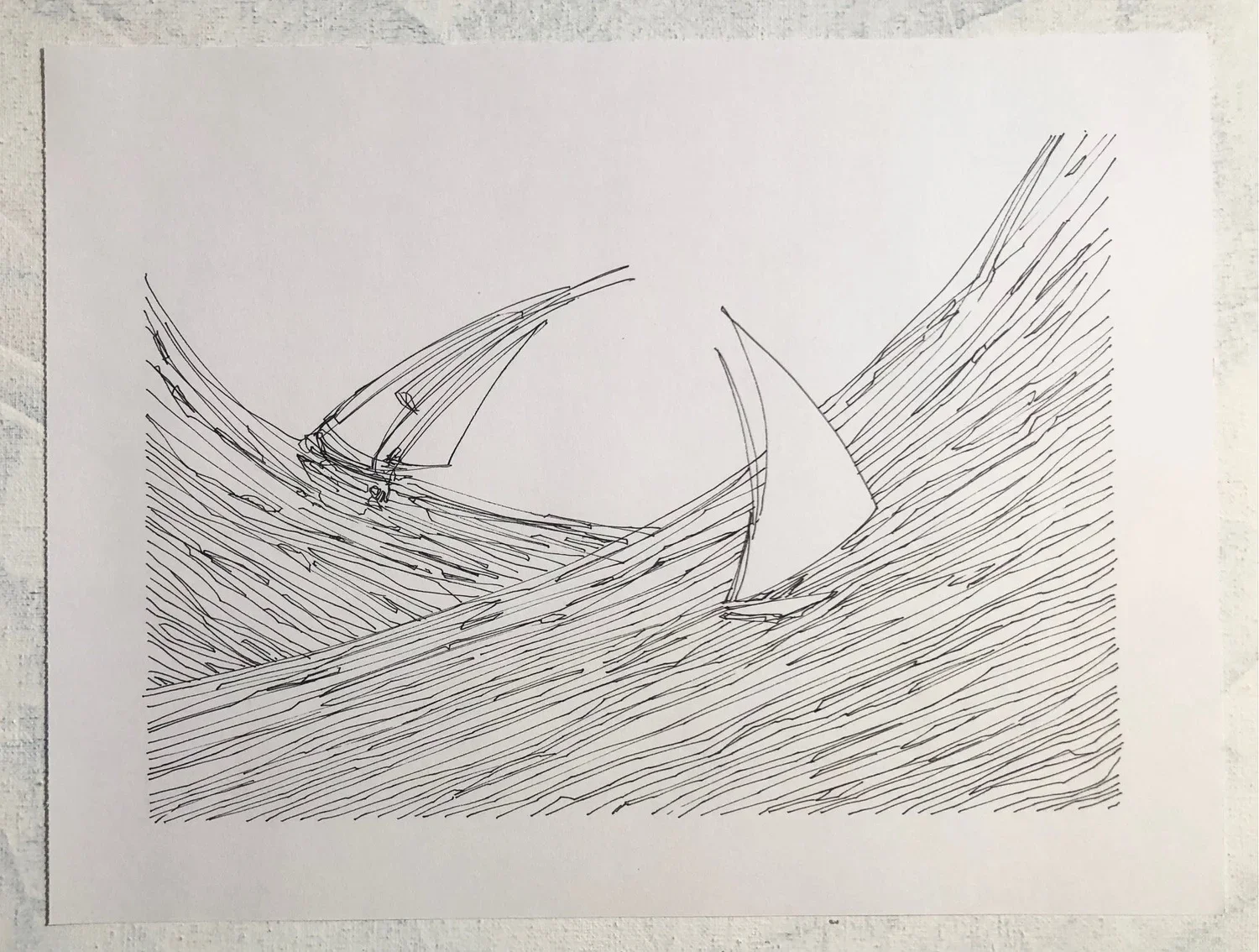
Centrifugal, 9×12 inches, ink drawing on watercolor paper
Both works originate from observation of nature and the ocean, yet their visual languages differ profoundly.
Painting builds presence through accumulation.
Drawing builds presence through precision.
For collectors, this distinction offers different forms of engagement. Line drawings provide clarity and immediacy. Paintings offer depth and material complexity. Both contribute meaningfully to a collection.
The Value of Direct Evidence of the Artist’s Hand
Collectors often seek connection—not only to imagery, but to the process behind its creation. Line drawings offer this connection directly. Their physical presence cannot be replicated mechanically. Each mark reflects a moment of attention.
Artists such as Cy Twombly demonstrated how line alone could carry emotional and physical immediacy. His gestural work is unmistakeable; it reveals the act of drawing itself, preserving movement and energy.
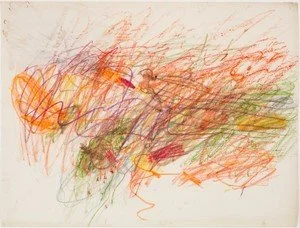
Cy Twombly, Untitled, 1954
This quality remains central to line-based modern abstract art. Collectors living with such work encounter evidence of its creation daily. The drawing reflects not only an image, but an action.
This presence creates continuity between artist and collector.
Contemporary Painting and Longevity in a Collection
One of the most meaningful aspects of collecting contemporary painting is its longevity. Abstract work does not resolve itself quickly. Its openness allows it to remain relevant over time and to every collector. This openness is one of the defining strengths of contemporary abstraction.
Indeed, collectors often discover new spatial relationships, rhythms, and balances through repeated viewing of contemporary abstraction. Familiarity deepens appreciation rather than diminishing interest–an important aspect for collectors regardless of the artwork’s price point.
Because abstract work does not rely on literal representation, it integrates naturally into evolving environments. Changes in light, surroundings, and perspective continually influence its presence.
This adaptability contributes to its lasting significance within a collection.
The Role of Discipline in Line-Based Abstraction
Collectors often respond instinctively to the clarity present in line drawings. This clarity emerges from discipline.
Line drawing does not allow hesitation. Once placed, the mark remains visible. This permanence encourages decisiveness and trust.
The result is work that feels grounded.
Work that feels intentional.
Work that feels honest.
This honesty remains visible over time. It strengthens the collector’s relationship with the work. Rather than demanding attention, line drawings invite quiet engagement.
They reward sustained observation.
Line Drawings as Independent Works
Line drawings exist as complete works in themselves. Although drawing often plays a role in preparation, finished line drawings achieve independent resolution.
They preserve the moment where observation becomes form.
They reveal visual structure without distraction.
They provide collectors with direct access to artistic perception.
Their restraint allows space to remain active within an environment. Line drawings introduce movement without visual weight, making them especially compatible with architectural spaces influenced by natural light and openness.
For collectors drawn to nautical decor or ocean-inspired contemporary painting, line drawings offer continuity with broader themes of nature, rhythm, and openness.
Modern Abstract Art as a Continuing Relationship
Modern abstract art does not conclude when the work is completed. Its meaning continues to develop through experience.
Each line drawing and contemporary painting reflects an ongoing process grounded in observation and discipline. Nature remains the underlying influence. The ocean remains a constant reference point.
Collectors become part of this continuation.
The work lives within their space.
It evolves through perception.
It remains present.
Line drawings, in their clarity and restraint, offer collectors a rare opportunity: to live with visual language at its origin. They preserve the moment where observation becomes form, and where modern abstract art begins.
I invite you to explore the visual language of the “Ink on Paper” series drawings.
An Invitation to Continue Following the Work
If you would like to follow the development of new modern abstract and ocean-inspired contemporary artwork, you are invited to join my collector list, The Current.
Subscribers receive:
Early access to new line drawings and paintings
Studio insights into process and evolving series
Collector previews prior to public release
Occasional reflections on nature, abstraction, and visual language
This is the most direct way to follow the work as it continues to develop.
Modern abstract art begins with line.
Collectors become part of its continuation.
👉 Subscribe here: https://www.alexandermorrisart.com/contact